


SCR Denitrification Process Equipment for Flue Gas in Lime Shaft Kiln
Price:
¥10000
/台
Contact Info
- Add:Changle Village, Wangwu Town, Botou City, Zip: 062155
- Contact: 常守峰
- Tel:13011424488
- Email:747569321@qq.com
Other Products


Description
Additional Information
Introduction to SCR Denitrification Process Equipment for Lime Shaft Kiln Flue Gas:
The SCR (Selective Catalytic Reduction) denitrification process equipment for lime shaft kiln flue gas is a key system used to treat nitrogen oxides (NOx) in the flue gas emitted from lime shaft kilns. Its core function is to convert NOx into harmless nitrogen (N₂) and water (H₂O) through the action of a catalyst and a reducing agent (such as ammonia water or urea). The following are the main components and functions of this process equipment:
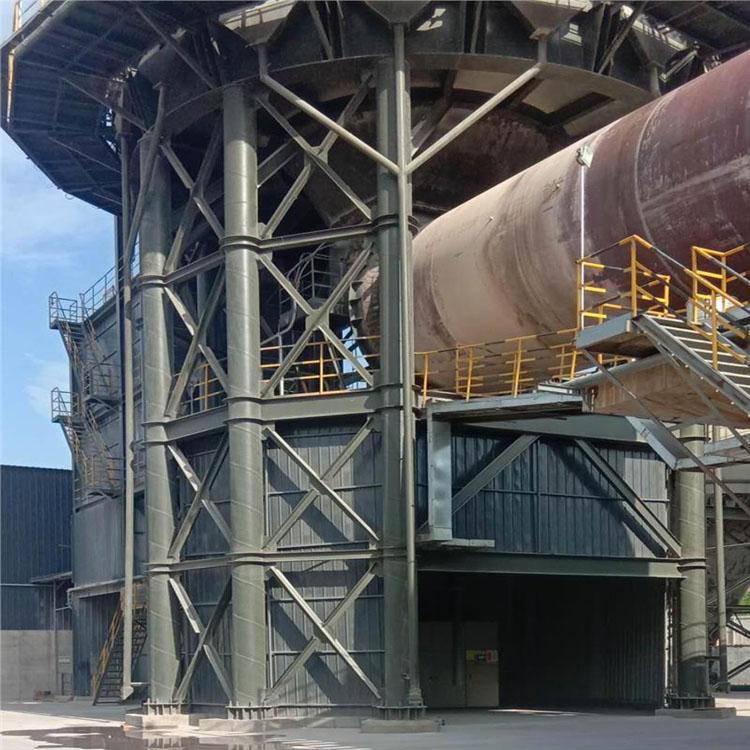
I. Core Equipment Components
- Flue Gas Preheating System
- Function: Preheats low-temperature flue gas (typically at a low temperature, requiring preheating to the catalyst's suitable reaction temperature range, generally 200-400°C).
- Equipment: Heat exchangers (such as gas-gas heaters, GGH) or burner-assisted heating.
- Importance: Ensures the flue gas temperature reaches the SCR catalyst's active window, improving denitrification efficiency.
- Reducing Agent Storage and Supply System
- Function: Stores and quantitatively delivers the reducing agent (e.g., 20%-25% concentration ammonia water or urea solution).
- Equipment: Ammonia water storage tanks, urea dissolution tanks, metering pumps, delivery pipelines, and safety protection devices (such as ammonia leakage alarms).
- Features: Requires anti-corrosion and anti-leakage design to ensure stable reducing agent supply.
- Reducing Agent Injection System
- Function: Atomizes the reducing agent and evenly sprays it into the flue, ensuring thorough mixing with the flue gas.
- Equipment: Spray guns (e.g., dual-fluid spray guns), mixers, distribution modules.
- Key Points: Injection angle and coverage must be precisely controlled to avoid localized ammonia slip.
- SCR Reactor
- Function: Provides a reaction space for the catalytic reduction of NOx and the reducing agent on the catalyst surface.
- Equipment: Reactor body (containing catalyst modules), rectifying grids, guide vanes.
- Catalyst: Typically uses honeycomb or plate-type catalysts with active components such as V₂O₅-WO₃/TiO₂. Sulfur-resistant and anti-poisoning catalysts are selected based on flue gas conditions.
- Catalyst Regeneration or Replacement System
- Function: Periodically treats deactivated catalysts or replaces them with new ones.
- Equipment: Regeneration devices (e.g., thermal desorption furnaces) or catalyst hoisting equipment.
- Cycle: Catalyst lifespan is generally 2-4 years, requiring evaluation based on operating conditions.
- Denitrification Byproduct Treatment System
- Function: Treats byproducts such as ammonium sulfate generated during the reaction to avoid clogging or corrosion.
- Equipment: Demisters, scrubbers (optional), byproduct collection devices.
- Control System
- Function: Monitors and adjusts parameters such as flue gas temperature, flow rate, NOx concentration, and reducing agent injection volume in real time.
- Equipment: DCS (Distributed Control System), CEMS (Continuous Emission Monitoring System), ammonia slip monitors.
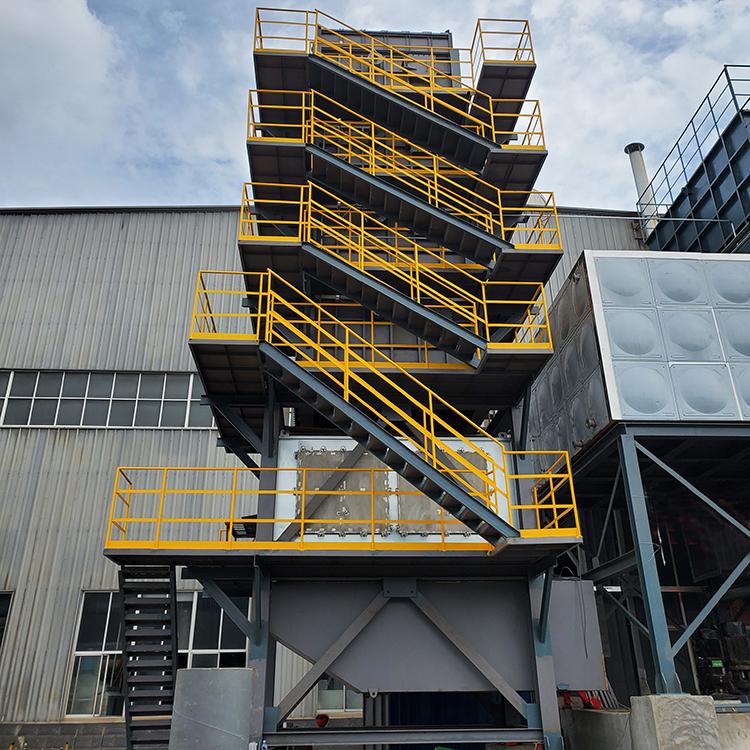
II. Process Flow
- Flue Gas Preheating: Low-temperature flue gas is heated to 200-400°C via heat exchangers or burners.
- Reducing Agent Injection: Ammonia water or urea solution is atomized and injected into the flue, mixing with the flue gas.
- Catalytic Reduction: The mixed gas enters the SCR reactor, where the reaction occurs on the catalyst surface:
4NO + 4NH₃ + O₂ → 4N₂ + 6H₂O
6NO₂ + 8NH₃ → 7N₂ + 12H₂O - Byproduct Treatment: Byproducts such as ammonium sulfate generated during the reaction are collected via demisters or scrubbers.
- Purified Flue Gas Emission: The treated flue gas is discharged in compliance with standards (NOx concentration typically below 50 mg/Nm³).
| Industry Category | Others |
|---|---|
| Product Category | |
| Brand: | 实恒 |
| Spec: | SCR |
| Stock: | 10 |
| Manufacturer: | 泊头市实恒除尘设备有限公司 |
| Origin: | 111309 |


